Monday, October 25, 2010

5 Google Affiliate Secrets To Help You Earn Thousands Of Dollars Monthly

There is no doubt that Google affiliates rank as some of the most successful affiliates anywhere on the web.
Yet few understand the reason behind this success. Even the majority of Google affiliates who are yet to start making huge five figure checks do not quite understand why the Google Adsense program has flourished so much within such a short time.
Anybody who understands the real secrets behind the phenomenal rise of Google affiliates will be in a much better position to benefit and profit from it, whether or not they are current Adsense affiliates.
1. Google Affiliates Are Riding On The Most Dramatic Shift In The Advertising Industry In History
A few webmasters think that this Adsense and pay per click affiliate mania is a passing fad. All indications are that this is not the case. If anything mounting evidence points to one of the most dramatic and rapid shifts in advertising industry history. You can't beat the deal to advertisers where they pay only for actual traffic to their website and more so when they can easily calculate their conversion rate on that traffic and predict their profit margin on the deal. This arrangement cannot be duplicated on TV or in any other offline media with so much precision and accuracy.
This means that advertising revenue will continue to shift away from other media and will move online at an even more rapid rate than is the case currently. And not just any online mediums like banner ads for example. The revenue will specifically shift to pay per click text ads. If you need some proof just look at the Google numbers in recent months, and most of it is being generated by PPC ad revenue.
What does that mean to a blogger or webmaster? It means huge and increasing profits as the number of advertisers grows and the competition between them for clicks grows fiercer.
It means that any expert in any tiny little niche will find it increasingly easier to make a good regular income from a low traffic targeted site with higher paying, more valuable Adsense keywords.
2. Google Affiliates Recognize That Content Is Not King, It's Everything
Writers, or rather good writers are already enjoying a huge advantage as Google affiliates. Only well written content will attract quality traffic and only interesting engrossing content will keep that traffic coming back again and again. Only high-quality keyword rich content will keep a site high in search engine rankings and thus guarantee enough traffic to keep Google affiliate adsense earnings high.
3. Top Google Affiliates Are All Using The Blog Secret
Blogs were created for linking and everybody knows that links are closely related to traffic in two ways, firstly they generate traffic but more importantly, they help a site achieve high search engine rankings with usually opens the floodgates of traffic. Top Google affiliates are using this secret to keep those big fat Google affiliate Adsense checks arriving by special courier every month.
Most top Google affiliates have dozens of blogs loaded with the right keywords and engaging content. With just a little SEO (search engine optimization) skills, these new breed of high flying online professionals are able to get their sites to the top of search engine rankings. It is then minimal maintenance as they sit back and watch the traffic volumes flow to their blogs already loaded with Adsense ads. The result of all this is that the clicks happening at their sites shoots up and with it their Google affiliate Adsense earnings.
4. Google Affiliates Are Using The Secret of The Hook
In advertising it is called the hook. Journalists call it the angle or slant of the story. Both mean the same thing. It is all about picking up a subject and asking yourself, what aspect of it most interests your audience? If you answer that question accurately then your ad or your article will attract maximum interest.
Online this is becoming more critical by the day. Content that is not slanted to fit the interests and needs of you audience will not attract enough interest and this impacts on the traffic of your blog or site and ultimately on your Google affiliate adsense earnings.

Lemon law and Wisconsin Lemon Law

Lemon laws are American state laws that provide a remedy for purchasers of cars in order to compensate for cars that repeatedly fail to meet standards of quality and performance. These cars are called lemons. The federal lemon law (the Magnuson-Moss Warranty Act) protects citizens of all states. State lemon laws vary by state and may not necessarily cover used or leased cars. The rights afforded to consumers by lemon laws may exceed the warranties expressed in purchase contracts. Lemon law is the common nickname for these laws, but each state has different names for the laws and acts.
In California, lemon laws cover anything mechanical, as do the federal lemon laws. The federal lemon law also provides that the warranter may be obligated to pay the prevailing party's attorney fees in a successful lemon law suit, as do most state lemon laws.

Warranty Overview

At the core of most lemon laws is the manufacturer's breach of warranty. A manufacturer's warranty is what makes the manufacturer legally responsible for repairs to the consumer's vehicle or good. It is a form of guarantee. An express warranty is typically a written warranty. An implied warranty unlike an express warranty, is not written. The law imposes these obligations on the manufacturer, the seller or both as a matter of public policy. These vary from state to state.

 Used car purchases
If you purchased a used car there are two situations in which you may be qualified for cash or other lemon law benefits:
Situation #1: Under Warranty
You may be entitled to compensation for breach of warranty if you had one of the following warranties:
Any warranty left from the manufacturer when you purchased your vehicle (for example, almost all vehicles sold with fewer than 36,000 miles will have this, unless the duration has ended. But if the warranty is longer, you may have even more time).
Your vehicle was "Certified" by the manufacturer (in which case it came with a short Manufacturer's Warranty, typically 1 year).
You purchased an Extended Warranty backed by the manufacturer (typically 5 years or longer).
Normally, these types of cases fall outside the scope of the state lemon law but are covered under special federal lemon laws.
Situation #2: When No Manufacturer's Warranty Exists
If you do not have a manufacturer's warranty of any kind you may be entitled to compensation for violations of consumer protection laws that fall outside of the lemon laws. The following is a list of some of the problems and/or issues which may be present in your vehicle.
Prior history of mechanical problems known to the seller: Laundered Lemon.
Previously salvaged or wrecked.
Fraudulently rolled back odometer.
Rental car, police car, taxi, or similar.
Stolen, stripped and rebuilt.
Involved in a flood.
Lemon Laws vary from state to state, so accurate information on the scope and restrictions of Lemon Laws in a particular state should be obtained from an attorney practicing in that state.

 "As is" purchases
Knowingly purchasing a car in "as is" condition does not void the buyer's rights under applicable lemon laws.[citation needed]

Other lemon laws
Lemon laws are not limited to cars. There are RV, boat, motorcycle, and wheelchair lemon laws.

In popular cultureThe character Barney Stinson from the TV series How I Met Your Mother introduced a concept of a Lemon Law for Blind Dates.

 Canada

The Canadian Motor Vehicle Arbitration Plan Canada - Canadian Motor Vehicle Arbitration Plan is the dispute resolution program for consumers in Canada that have problems with the assembly of their vehicle or with how the manufacturer implements its new vehicle warranty. CAMVAP covers new or used owned or leased vehicles that are from the current model year and up to an additional four model years old.
CAMVAP is an arbitration program. It is free to consumers. Hearings are held in the consumer's home community. The process normally takes less than 70 days from start to finish. Most consumers are able to handle their own case without the assistance of lawyers. The manufacturers do not use lawyers. Their representatives usually are serving or retired district parts and services representatives. An inspection of the vehicle normally is part of an arbitration hearing and the arbitrator can order a technical inspection of the vehicle at the program's expense if doing so is required.
CAMVAP arbitrators can order the manufacturer to buyback the vehicle; repair it at the manufacturer's expense; pay for repairs already completed; pay out of pocket expenses for items such as towing, diagnostic testing, rental cars and accommodation related to the problem with the vehicle. The arbitrator can also order that the manufacturer has no liability.
CAMVAP is available in every Canadian Province and Territory.

                  ------------------MORE--------------

Wisconsin Lemon Law

Wisconsin Lemon Laws and the federal Lemon Law (the Magnuson-Moss Warranty Act) provide for compensation to Wisconsin consumers of defective automobiles and trucks  and other vehicles and products including motorcycles, RV’s, boats, computers and other consumer appliances and products. To qualify under the Wisconsin Lemon Law or the federal Lemon Law, you must generally have a product that suffered multiple repair attempts under the manufacturer’s factory warranty. Lemon Law compensation can include a refund, replacement or cash compensation. If you think you qualify for a Lemon Law, click here for a free Wisconsin Lemon Law case review or for an immediate evaluation, simply fax your repair records to 866-773-6152. An experienced Lemon Law attorney will personally review your inquiry and records and quickly contact you for a free consultation.

What is a Lemon?

A new vehicle, no more than a year old and still under warranty, is a lemon if it has a serious defect the dealer can't fix in four tries, or if it has one or many defects that prevent you from using it for 30 days or more (the 30 days need not be consecutive).

What is a defect?

A defect covered by the Lemon Law must seriously affect the use, value or safety of your vehicle and must be covered by the warranty. An irritating rattle may not be "serious" enough to make your car a lemon. Stalling probably is.

What vehicles are covered?

The law covers any new car, truck, motorcycle or motor home you buy or lease in Wisconsin, even if you register the vehicle in another state. It also covers a demonstrator or executive vehicle, but does not cover other used vehicles. The law also does not cover mopeds or trailers.

How long are you covered?

The Lemon Law includes no deadline for filing a Lemon Law suit; a court would decide if your case were too old. Some attorneys maintain that the limit would be six or seven years after purchase; however, some attorneys may be reluctant to handle cases over four years old.

Is my vehicle a lemon?

Your vehicle is a lemon if all of the following statements are true:
You bought or leased a vehicle in Wisconsin.

The vehicle is a car, truck, motorcycle or motor home.

The vehicle developed a defect or defects during its first year and before the warranty expired.

The defect seriously harms the vehicle's use, value or safety.

One of the following happened during the vehicle's first year and before the warranty expired:
The dealer failed four times to fix the same defect; OR
The vehicle was out of service for 30 days or more due or more defects

What should a lemon owner do?

Get a repair order for every repair visit, even if the shop doesn't diagnose the problem or attempt a repair. A repair order should show the problem you report, and the dates your car is in the shop.
Keep purchase contracts, warranties, and repair orders to prove you have a lemon. Don't keep repair orders in your car where they may get lost.
We suggest you use WisDot's Motor Vehicle Lemon Law Notice Form to ask the manufacturer for a refund or replacement vehicle. Send the form to the manufacturer at the address in your owners manual. Your refund should include the full purchase price, sales tax, any finance charge, and collateral costs (for example, repairs, towing, alternative transportation), minus the mileage deduction allowed by law. If you get a replacement vehicle, the manufacturer should refund your collateral costs and charge nothing for mileage.
If you return to the manufacturer a vehicle that has missing equipment or unrepaired damage beyond normal wear and tear, a manufacturer may want to negotiate a damage deduction. You should not be responsible for paying for normal wear and tear, such as minor dents, scratches, pitted glass, soiled carpets, minor stains or tears. Feel free to have the damage appraised at a location you choose, or to have it repaired rather than paying a deduction.
If you don't get a refund or replacement by writing the manufacturer, consider using your manufacturer's arbitration program. If your manufacturer has a program certified by WisDOT, you must use it before you can sue under the Lemon Law. If your manufacturer's program is not certified, you do not have to use it. However, if you do use it, you might get a decision you like. You can reject any decision you don't like. See the list of arbitration programs listed below.
Talk to an attorney if the manufacturer doesn't help you. A court may need to decide if your vehicle is a lemon and what settlement you deserve. If you sue the manufacturer and win, you could get double the vehicle purchase price, plus other costs and attorney fees. To find an attorney who handles Lemon Law cases, contact the State Bar of Wisconsin Attorney Referral Service toll-free at (800) 362-9082, or at (608) 257-4666. Or visit WisBar Lawyer Referral and Information Service.
Who can I call for help?Wisconsin Department of Transportation's Dealer Section licenses and regulates dealers and manufacturers and helps resolve disputes about vehicle sales and warranties. Contact the Dealer Section if you have a complaint against a dealer or manufacturer.
The Dealer Section won't resolve your Lemon Law complaint for you, but it will give you more information about using your Lemon Law rights.
Dealer Section
Wisconsin Department of Transportation
P. O. Box 7909
Madison, Wisconsin 53707-7909
(608) 266-1425
Manufacturer arbitration programs

Laser Hair Removal and How does Laser Hair Removal work??

    About Laser Hair Removal

  1. Laser hair removal is a series of treatments for long-term hair removal. People wanting lasting results choose laser treatments to avoid shaving, waxing and epilation. A laser is used on unwanted body or facial hair to heat the hair follicle at its base, destroying the hair and preventing regrowth. Laser hair removal can keep an area free of hair for extended periods of time and sometimes permanent results are achieved.

    Laser Treatment Candidates

  2. Candidates for laser hair removal will meet with a doctor to discuss how well laser treatments will work on their hair and skin type. The consultation will include risks and benefits including lightening of skin if you are darker skinned and darkening of the skin for lighter skinned people. It's recommended to let a tan fade before laser treatments are administered.

    Before Laser Treatment

  3. Before a laser treatment starts, a technician makes sure that there are no lotions, cosmetics or creams on the area to be treated. Chemicals can hinder the hair removal process and in some cases cause adverse reactions in the patient.

    Laser Treament Process

  4. A gel is applied to the area to be treated. This gel works as a conductor for the laser and helps keep the skin cool during the procedure. A technician will use a hand-held laser tool on an area to remove the hair. The procedure can cause discomfort in some individuals. Discomfort is usually slight and fades quickly.

    How Laser Hair Removal Works

  5. The light from the laser goes into the shaft of the hair destroying the hair at its root, effectively stopping or reducing hair growth in a given area. Lasers are set to target pigmentation; therefore laser hair removal is usually more effective on darker hair. Because of this pigmentation targeting, laser hair removal treatments were often avoided by people with darker skin. New laser technology has made laser hair removal safer and more effective for people with more varied skin tones and hair colors.

    After Laser Hair Removal

  6. Laser technicians will advise multiple sessions to ensure long lasting results. Hair growth is cyclical in that all the hair in a given area does not grow or show up at the same time. Repeated sessions over the course of several months to a year are recommended to keep an area hair-free. Anywhere from 3 to 8 sessions are usually needed over the course of a hair removal treatment.

How does high-tech hair removal work? There are a couple options, both of which rely on heated lights: Laser beam or intense pulsed light (IPL). Lasers are focused beams, whereas IPL uses interspersed flashes. While one visit will result in a lot of hair removal, it takes about 5 visits each one month apart to kill as much as 70% of the hair. Hair grows in cycles so you want to make sure you get as much of it as possible.

Is everyone a good candidate? Lasers work best on people with pale skin and dark hair (like me!), but these days there are even options for women with dark skin and light hair. Keep in mind dark skin may require 2-3 more sessions.

Are the results guaranteed? It's impossible to predict how successful lasers will work on everyone. Results depend on the quality of the laser, the type of hair you have and the number of procedures you have done. Never trust a company that guarantees hair removal. I suggest you try to a consultation in person before you sign up.

How much does it cost? Depends. Laser hair removal isn't cheap (about $200-$500 a session depending on where you live and the areas being treated. Again, it takes about 6 sessions to get rid of 70% of hair permanently. Touch-ups are always an option at about $100-$150 a session.

Preparation for Your First Treatment
Before you will be considered for the procedure, you must consult a surgeon and see if they think the procedure will work on you. Then if you are accepted photographs will be taken from different angles on the area to be treated.
Don’t use hair treatment products such as gels and waxes three weeks before you go in for treatment or you will have to wait even longer. Those products can interfere with the procedure

How Laser Hair Removal Works

A cosmetic surgeon will first apply an anesthetic cream to the area he will be working with. When the cream starts working the surgeon will place a laser device against your skin as well as an additional cooling device that keeps the rest of skin cooled. Depending on the area the surgeon will be working on you may be asked to wear goggles. One treatment can take anywhere from 5 minutes to several hours depending on what area you are having treated at that time.

Tips For After The Procedure

Avoid direct sunlight after your procedure so you don’t damage the skin and also don’t touch the affected area. Besides following these two simple rules, your life can return to normal. Laser hair removal should not effect your day to day routine at all.

Laser Hair Removal Downsides

Most people who go through with laser hair removal never experience any problems but as with every cosmetic or medical procedure there are risks. These can include incomplete removal of the hair but that can usually be solved with more treatments. The worst side effect that can occur is hyper pigmentation or darkening of the skin. Usually this is temporary but in some rare cases can be permanent. Hypo pigmentation could also occur which is where the skin actually becomes lighter in color.
Even though these risks exist many many people still go through the procedure and its popularity is still growing. If you’re looking for the solution to your unwanted hair there really is only one long lasting option: laser hair removal.

Laser hair removal

Epilation by laser was performed experimentally for about 20 years before it became commercially available in the mid 1970s. Intense Pulsed Light (IPL) epilators, though technically not a laser, use xenon flash lamps that emit full spectrum light. Laser and light-based methods, sometimes called phototricholysis or photoepilation, are now most commonly referred to collectively as "laser hair removal". One of the first published articles describing laser hair removal was authored by the group at Massachusetts General Hospital in 1998.
The efficacy of laser hair remoal is now generally accepted in the dermatology community, and laser hair removal is widely practiced. Many reviews of laser hair removal methods, safety, and efficacy have been published in the dermatology literature.
Mechanism of action

The primary principle behind laser hair removal is selective photothermolysis (SPTL).Lasers can cause localized damage by selectively heating dark target matter, (melanin), in the area that causes hair growth, (the follicle), while not heating the rest of the skin. Light is absorbed by dark objects, so laser energy can be absorbed by dark material in the skin (but with much more speed and intensity). This dark target matter, or chromophore, can be naturally-occurring or artificially introduced.
Hair removal lasers selectively target melanin:
Melanin is considered the primary chromophore for all hair removal lasers currently on the market. Melanin occurs naturally in the skin (it gives skin and hair its color). There are two types of melanin in hair: eumelanin (which gives hair brown or black color) and pheomelanin (which gives hair blonde or red color). Because of the selective absorption of photons of laser light, only black or brown hair can be removed.
Laser works best with dark coarse hair. Light skin and dark hair are an ideal combination, but new lasers are now able to target dark black hair even in patients with dark skin.
Hair removal lasers have been in use since 1997 and has been approved for "permanent hair reduction" in the United States by the Food and Drug Administration (FDA)."Permanent" hair reduction is defined as the long-term, stable reduction in the number of hairs re-growing after a treatment regime. Indeed, many patients experience complete regrowth of hair on their treated areas in the years following their last treatment. Laser hair removal has become extremely popular because of its speed and efficacy, although some of the efficacy is dependent upon the skill and experience of the laser operator, and the choice and availability of different laser technology at the clinic which is performing the procedure. Some will need touch-up treatments, especially on large areas, after the initial set of 3-8 treatments. It has also been observed that some people seem to be non-responders – this is not confirmed and reasons are not known, and may in fact be due to lack of skill on the part of many laser operators and/or the type of machine and settings they are using.
 Comparison with electrolysis
Electrolysis is another hair removal method that has been used for over 135 years.At this time, it is the only permanent option for very fine and light-colored hair. The FDA currently allows the term "Permanent Hair Removal" for electrolysis only. Unlike laser epilation, electrolysis is effective on all hair colors.
A study conducted in 2000 at the ASVAK Laser Center in Ankara, Turkey comparing alexandrite laser and electrolysis for hair removal on 12 patients concluded that laser hair removal was 60 times faster, less painful and more reliable than electrolysis.
 Laser parameters that affect results
Several wavelengths of laser energy have been used for hair removal, from visible light to near-infrared radiation. These lasers are usually defined by the lasing medium used to create the wavelength (measured in nanometers (nm)):
Argon: 488 nm (DeepSkyBlue) or 514.5 nm (Cyan) (no longer used for hair removal)
Ruby laser: 694.3 nm (OrangeRed) (no longer used for hair removal; only safe for patients with very pale skin) [10]
Alexandrite: 755 nm (Red) (most effective on pale skin and not safe on darker skin at effective settings)
Pulsed diode array: 810 nm (Near-Infrared) (for pale to medium type skin)
Nd:YAG laser: 1064 nm (Near-Infrared) (made for treating darker skin types, though effective on all skin types)
Pulse width is an important consideration. Longer pulse widths may be safer for darker skin, but shorter pulsewidths are more effective in disabling hair follicles.[citation needed] Repetition rate is believed to have a cumulative effect, based on the concept of thermal relaxation time.[citation needed] Shooting two or three pulses at the same target with a specific delay between pulses can cause a slight improvement in the heating of an area. This may increase the "kill rate" for each treatment.
Spot size, or the width of the laser beam, affects treatment. Theoretically, the width of the ideal beam is about four times as wide as the target is deep. Hair removal lasers have a spot size about the size of a fingertip (8-18mm). Larger spot sizes help laser light penetrate deeper and make treatments faster and more effective.
Fluence or energy level is another important consideration. Fluence is measured in joules per square centimeter (J/cm²). It's important to get treated at high enough settings to heat up the follicles enough to disable them from producing hair.
Epidermal cooling has been determined to allow higher fluences and reduce pain and side effects, especially in darker skin. Three types of cooling have been developed:
Contact cooling: through a window cooled by circulating water or other internal coolant
Cryogen spray: Sprayed directly onto the skin immediately before and/or after the laser pulse
Air cooling: forced cold air at -34 degrees C (Zimmer Cryo 5 unit)

 Number of sessions

Multiple treatments (typically 6-8 spaced 8-12 weeks apart) depending on the type of hair and skin color have been shown to provide long-term reduction of hair. Current parameters suggest a series of treatments spaced at 8-12 weeks apart for based on typical hair cycle patterns for each area.[11]
The number of sessions depends on various parameters, including the area of the body treated, skin color, coarseness of hair, reason for hirsutism, and sex. Coarse dark hair on light skin is easiest to treat. Hair on darker skin is harder to treat. Finer hair is only sometimes affected. Certain areas (notably men's faces) may require considerably more treatments to achieve desired results. In addition, since hair grows in several phases (anagen, telogen, catagen) and laser can only affect the currently active growing follicles (anagen), several sessions are needed to kill hair in all phases of growth.
It's important to note that laser does not work well on light-colored hair and most fine and vellus hair ("peachfuzz") of any color.

Intervals between sessions

Usually treatments are spaced 8–12 weeks apart depending on the body area and the hair cycle length for that area. For example, faces usually require more frequent treatments about 3-4 weeks apart, whereas legs require less frequent treatments.
Instead of following an arbitrary schedule, one should wait until they have experienced shedding of the treated hairs, which should complete within 2-3 weeks, and see enough hair come in after the hair-free period to have another treatment.[12] It's advisable to do a touchup if significant amount of hair hasn't shed within 3 weeks.

Other uses
Hair removal lasers are effective treatment for pseudofolliculitis barbae (commonly called ingrown hairs or "shaving bumps"). For darker skin patients with black hair, the long-pulsed Nd:YAG laser with a cooling tip can be safe and effective when used by an experienced practitioner.
They have recently been reported as helpful treatment for pilonidal cysts, since they eliminate the ingrown hairs that produce the troublesome foreign body reactions in this congenital malady.

Side effects and risks

Some normal side effects may occur after laser hair removal treatments, including itching, redness, and swelling around the treatment area. These side effects should not last more than three days. Some level of pain should also be expected during treatments. Numbing creams are available at most clinics, usually for an additional cost. Icing the area after the treatment helps relieve the side effects faster.
Unwanted side effects such as hypo- or hyper-pigmentation or, in extreme cases, burning of the skin call for an adjustment in laser settings. Risks include the chance of burning the skin  or discoloration of the skin, hypopigmentation (white spots), flare of acne, swelling around the follicle, scab forming, purpura, and infection. These risks can be avoided when being treated at with an appropriate laser type and at appropriate settings for the individual's skin type.
Some patients may show side effects from an allergy to either the hair removal gel used with certain laser types or to a numbing cream. A physician should be consulted if an allergic reaction presents itself after the treatment.
Temporary Side Effects
There are several temporary side effects which can occur immediately after a laser hair removal treatment. These temporary effects eventually go away with time, though some can take days, weeks, or even months to completely resolve. The following are some common temporary side effects which might develop after your treatment:
Pain
A patient can have pain both during and after the procedure. Pain during the treatment is normally alleviated by using a local anesthetic or other methods as prescribed by the practitioner. Pain after the procedure may be improved through the use of a prescribed pain relief medication. In addition, sometimes cold packs can help.
Swelling
It is normal that there may be some swelling at and around the area that was treated. Depending on what area you have chosen to treat, this side effect may be more or less of a problem. This problem may be relieved through use of topical treatments prescribed by your practitioner.
Redness
A patient can also observe redness in and around the treated area, but redness is probably the least serious side effect of laser hair removal. However, it may be more of a problem if you have treated a well seen or visibly noticeable area, such as on your face. This problem can be resolved by using a topical treatment prescribed by your physician.
Blistering
The patient can develop blisters on the skin after the treatment. Blistering is a painful, noticeable, and embarrassing temporary side effect. This often occurs due to the use of higher influence laser especially in the case of dark skin. These can be soothed with the help of tissue cooling through a contact chill tip or cryogen spray.
HyperpigmentationSome times a patient’s skin can develop dark spots on and around the treated areas. These spots are called hyperpigmentation. This side effect usually takes considerable time to get cure, but it usually resolves itself without requiring any treatment.

Permanent Side Effects
There are some permanent side effects that a patient can have after a laser hair removal treatment. The chances for these side effects can be reduced greatly if the treatment is performed under the supervision of a good practitioner. The following are some of the permanent side effects that a patient can have after the treatment:

Skin discoloration
There may be a permanent lightening of the skin in the treated area. As the laser works by attacking the pigmentation in darker colored hair it can sometimes affect darker colored skin as well. How skin lightening occurs is not clear, but it seems the laser can destroy the skin melanocyte pigment producing cells. The skin discoloration may be permanent though it can very slowly recover in some cases.

Burns
Burns are also possible as a side effect of laser hair removal, but they are very rare and they are usually the work of less qualified technicians. It can be painful, but burns will heal with appropriate after care.
Scaring
Scaring mostly occurs when the area is treated by someone who is minimally trained or by an accidental over-treatment. Scarring is the result of severe burns as a result of inappropriately applied laser hair treatments. If the laser light applied to remove the hair is significantly in excess of what the skin can handle then burning will occur deep in the skin dermis. When this happens the skin heals by formation of a scar.
Laser hair removal is a safe treatment but, as a rule, some temporary side effects are possible, including darker or lighter marks, especially in dark skin and tanned skins. There is no risk of burning if the device is correctly attuned to the skin color of the individual receiving laser treatment.

 References

^ Dierickx, C.C., et al., Permanent hair removal by normal-mode ruby laser. Arch Dermatol, 1998. 134(7): p. 837-42.
^ Gold MH. Lasers and light sources for the removal of unwanted hair.Clin Dermatol. 2007 Sep-Oct;25(5):443-53.
^ Eremia, S., et al., Laser hair removal: long-term results with a 755 nm alexandrite laser. Dermatol Surg, 2001. 27(11): p. 920-4.
^ The matching of a specific wavelengh of light and pulse duration to obtain optimal effect on a targeted tissue with minimal effect on surrounding tissue
^ FDA.gov
^ FDA.gov
^ Hairtell.com
^ Michel CE. Trichiasis and distichiasis; with an improved method for radical treatment. St. Louis Clinical Record, 1875 Oct; 2:145-148
^ Görgü M, Aslan G, Aköz T, Erdoğan B (January 2000). "Comparison of alexandrite laser and electrolysis for hair removal". Dermatol Surgery 26 (1): 37–41. doi:10.1046/j.1524-4725.2000.99104.x. PMID 10632684.
 http://www3.interscience.wiley.com/journal/119189326/abstract
^ Hairtell.com
^ Hairtell.com
^ Laserhairremoval.com
^ Laser Hair Removal Complications
^ Can I Sunbathe Before or After Laser Hair Removal?

Sunday, October 24, 2010

Personal Injury Lawyers

A personal injury lawyer is a lawyer who provides legal representation to those who claim to have been injured, physically or psychologically, as a result of the negligence or wrongdoing of another person, company, government agency, or other entity. Thus, personal injury lawyers tend to be especially knowledgeable and have more experience with regard to the area of law known as tort law, which includes civil wrongs and economic or non-economic damages to a person’s property, reputation, or rights.

Even though personal injury lawyers are trained and licensed to practice virtually any field of law, they generally only handle cases that fall under tort law including, but not limited to: work injuries, automobile and other accidents, defective products, medical mistakes, slip and fall accidents, and more.

The expression "trial lawyers" can refer to personal injury lawyers,[citation needed] even though most cases handled by personal injury lawyers settle rather than going to trial and other types of lawyers, such as defendants' lawyers and criminal prosecutors, also appear in trials.
Responsibilities

A personal injury lawyer has numerous responsibilities in serving his or her clients. These responsibilities encompass both professional and ethical rules and codes of conduct set forth by state bar associations where the lawyers are licensed. Once licensed to practice law by their state bar association, lawyers are legally permitted to file legal complaints, argue cases in state court, draft legal documents, and offer legal advice to victims of personal injury.

Also referred to as a plaintiff lawyer, a personal injury lawyer is responsible for interviewing prospective clients and evaluating their cases to determine the legal matter, identify the distinct issues rooted within the plaintiff’s larger problem, and extensively research every issue to build a strong case. The ultimate professional responsibility of a personal injury lawyer is to help plaintiffs obtain the justice and compensation they deserve for their losses and suffering through advocacy, oral arguments, client counseling, and legal advice.

Personal injury lawyers must also adhere to strict standards of legal ethics when dealing with clients. While the guidelines vary according to state, the basic codes of conduct state that a lawyer must knowledgeably evaluate legal matters and exercise competence in any legal matter undertaken. Moreover, personal injury lawyers owe their clients a duty of loyalty and confidentiality and must work to protect their clients’ best interests.

 Certification and education

In order to practice law in the United States, a personal injury lawyer must pass a written bar examination and, in some cases, a written ethics examination. Bar examinations vary on a state-to-state basis. However, most states require applicants to have completed a four-year college degree and a law degree from an accredited law school (California is one notable exception, but the non-accredited law school must meet certain requirements.)[1]

In all states, a personal injury lawyer is required to take the Multistate Bar Examination (MBE)[2], the Multistate Essay Examination (MEE), and the Multistate Professional Responsibility Examination (MPRE) and a state bar exam. Some states require another exam, the Multistate Performance Test (MPT), as well.

Once admitted to the state bar, personal injury lawyers must remain up-to-date on the latest legal and non-legal developments in their field of practice by completing a required number of continuing legal education (CLE) courses designed to help personal injury lawyers stay abreast of developments in their field. The number of CLE hours required varies by state.

Lawyers can concentrate their practices to certain areas of law, which is typically true of personal injury lawyers. By limiting the range of cases they handle, personal injury lawyers are able to acquire specialized knowledge and experience. However, to be certified as a specialist in personal injury, a lawyer must complete a specialty certification program accredited by the American Bar Association (ABA).

Certification programs have set standards of competence, knowledge and experience that lawyers must meet in order to be recognized in their area of practice as a specialist. Lawyers who have completed a specialty certification program in personal injury law at an accredited certifying organization are recognized as personal injury specialists. Some states, such as New Jersey, offer a certification as a "Certified Trial Attorney", which can be for both plaintiff and defense attorneys.

Career structure

The career structure of most lawyers varies widely. Once licensed, a lawyer may take on any kind of case whether or not they have much experience in it. However, legal ethics require an inexperienced lawyer to enlist appropriate help or take the time to learn the issues to competently represent the client. Most lawyers prefer to stick to one area of the law to gain the knowledge and experience necessary to provide the highest quality legal representation to their clients.

Personal injury lawyers choose to delve into a more specialized area involving only personal injury litigation. Personal injury litigation involves a large number of claims including accidents, medical malpractice, product liability, workplace injury, wrongful death, and more. Some personal injury lawyers choose to devote the majority of their time and energy to one area of litigation within personal injury law, thus becoming more experienced at handling very specific types of cases (e.g. medical mistakes, aviation accidents, work accidents).

Doing business

As with other types of lawyers, personal injury lawyers may choose to start a solo practice or join a small, mid-size, or large law firm as an associate. Personal injury lawyers may also be partners (owners) of a law firm or strive to be a partner.

Sole practitioners of personal injury law offer a number of benefits to potential clients, which include more personal attention and a one-on-one working relationship between the lawyer and the client. Sole practitioners are also more willing to take on smaller cases and often have lower fees and costs.

A small law firm generally consists of two to ten lawyers who can provide more expertise in a given area of personal injury law and can handle a wider range of legal issues. Mid-size law firms with ten to 50 lawyers offer legal representation in almost every major area of litigation and may house several highly experienced and knowledgeable personal injury lawyers. Large law firms with more than 50 lawyers are often the most reputable, having built up the firm for a number of years and consisting of lawyers with high levels of expertise.

Compensation
Typically lawyers’ fees are based on a number of factors, which may include the time and energy spent on a case, the outcome of a case, the difficulty of a claim, the experience and prominence of the lawyer, and the costs associated with the case. There are several standard payment options a personal injury lawyer may offer his/her clients. These options include contingency fees, hourly rates, flat fees, and retainers.

A contingency fee is a prior arrangement between lawyer and client in which the lawyer receives a set percentage of the amount of recovery awarded to the plaintiff in a case. In most cases, monetary recovery is obtained through settlement, mediation, arbitration or trial. Generally, when a lawyer takes a case on a contingency fee, a client has no obligation to pay his/her lawyer a fee unless the case is successfully resolved. Most personal injury lawyers work on a contingency fee basis. An hourly rate is also a common payment option that involves an agreed amount of compensation for each hour the lawyer spends on the case until its resolution. In some cases, personal injury lawyers charge a flat fee, which is a set amount, or a retainer, which is an arrangement where a certain amount of money is paid before legal representation begins. These fee arrangements may also be combined.

Professional regulations and associations

Personal injury lawyers are regulated by codes of conduct established by state bar associations, which have the power to take disciplinary action against lawyers who violate professional or ethical regulations. The American Bar Association (ABA) Joint Committee on Lawyer Regulation offers assistance to state bars, helping them to draft, implement, and/or promote regulatory policies regarding personal injury lawyers.

Personal injury lawyers may belong to any number of professional associations, some of which are mandatory and others voluntary. For instance, personal injury lawyers are licensed by their state bar associations, of which they must be members. Among the more common professional associations that personal injury lawyers may voluntarily join are the following:

    * American Bar Association – a professional association dedicated to improving the legal system and providing accreditation for law schools and continuing legal education programs
    * Association of Personal Injury Lawyers – an association founded in 1990 by personal injury lawyers on behalf of accident victims
    * Association of Trial Lawyers of America – also known as ATLA, an association of trial lawyers that was founded in 1946 by a group of plaintiff’s attorneys committed to safeguarding victims’ rights. In 2007, ATLA changed its name to the American Association for Justice, also known as the AAJ.[3]

    The Mission of the American Association for Justice is to promote a fair and effective justice system—and to support the work of attorneys in their efforts to ensure that any person who is injured by the misconduct or negligence of others can obtain justice in America's courtrooms, even when taking on the most powerful interests.

 Criticism

The aggressive representation of injured parties by personal injury lawyers has spawned movements to establish tort reform in the United States in recent years. Tort reform proponents argue that such reforms are necessary because personal injury litigation has led to a substantial increase in health care costs; they further claim that many doctors have had to leave practice or relocate because of cost-prohibitive medical malpractice insurance rates. A recent publication by the Harvard School of Public Health found that in only 60% of medical malpractice litigation cases was there evidence of medical error.

How to Consolidate Private Student Loans

The pursuit for higher education can be an expensive endeavor both financially and emotionally. For such a noble quest, it is a shame that it must be pursued under the looming shadow of overwhelming loan payments. It is well worth your time to look into the options available for consolidating your student loans. Read on to learn how to consolidate your private student loans. It may keep you from what can amount to a life sentence enforced by your creditors.

Instructions

  1. List all the outstanding private student loans that you owe, listing them in order from the highest balance to the lowest. For each one, list the interest rate, pay off amounts, loan period and payment address.

  2. Review the terms on each of your current loans. Terms such as pre-payment penalties may make it prohibitively expensive to refinance a particular loan by consolidating it with another.

  3. Clean up your credit report. When you apply for to consolidate your student loans, the interest rate will be based on your credit score. It is essential that your review your credit report and make sure there are no errors, which are common on most credit reports. If you have paid off a loan or closed a credit card and it is still listed on your credit report, it can significantly affect your credit score. Make sure that any errors are corrected.

  4. Determine your objectives for consolidating your student loans. The different student loans typically do not compete on interest rates, so they are pretty similar from one education lender to the other. However, here are some objectives that you can accomplish by consolidating your student loans:*You will have a single payment rather than two or more, making it easier to manage the loan.*If one or more of your private student loans has a variable interest rate, consolidating into a home equity loan will lock in your interest rate.*You can benefit from lower monthly payments because, by consolidating the loans, the terms are re-set, extending the amount of time you have to pay-off the loan. This does come at a price, though, because you will end up paying more in interest.*If your credit score has improved by 50 to 100 points since you applied for the loans, you can save significantly by consolidating because your interest rate will be much lower.

  5. Research the different terms that are offered by different education lenders. Pay particular attention to any pre-payment penalties. Verify whether the interest rates are fixed or variable. If you apply with a co-signer, find out when you can remove the co-signer from the loan. Find out the associated costs such as loan origination fees, and whether or not you can roll them into the loan if you choose to. Find out additional incentives offered by each lender such as interest rate reduction for setting up automatic payments from your bank account.

  6. Consider the pros and cons of consolidating with non-education lenders. Consider applying for a personal loan from your bank. Consider a home equity loan.

  7. Contact one of your current loan company. They may agree to consolidate all loans at a lower rather than lose you as a customer.

  8. Short-list the education lenders (and/or non-education lenders). Compare and make your selection. Apply to consolidate your loan.

    Tips & Warnings

    • Private student loans typically can't be consolidated with your federal student loans.
    • The interest rates on Private student loans are not set by the federal government, and can therefore vary greatly in rates and terms.


No win no fee

"No Win No Fee" in the UK is the term used to describe the Conditional Fee Agreement (CFA) between a law firm and their client. In any claim (Commercial or Personal Injury), this is an agreement between the client and their lawyer, which will enable the lawyer to take on a case on the understanding that if they lose the case, the client will not have to pay their lawyer’s costs, but will still be responsible for the defendants costs if the case is lost.[1]
However, if the lawyer wins the case they will be entitled to their standard fee plus an uplift referred to as a success fee. In English law, the success fee cannot be greater than 100% of the lawyer’s standard fee.
If the client wins their case, either the Courts or the losing party’s will make an award of damages. In addition, the defendant will be required to pay the client's legal costs including any uplift of fees as well as expenses. With most Conditional Fee Agreements, the client will have nothing to pay and will receive 100% of any compensation awarded in their claim.
To protect a client from an adverse cost order (meaning having to pay the costs and fees of the defendant if the client is not successful) a solicitor can purchase an After the Event Insurance (ATE) is the term used to describe the type of funding document, which is normally obtained by a lawyer acting on behalf of their client. This is generally taken out at the outset of a claim, when a Conditional Fee Agreement (CFA) is entered into. ATE insurance is designed to protect the client from the risk of legal costs and disbursments of the defendant and usually covers the clients own disbursments if the case is either discontinued, lost at trial or any disbursment shortfall even if the client wins, an admission of liability still leaves the client at risk to cost orders, solicitor clients need to be aware that if they lost their case or a solicitor has discontinued their case and the client was not advised of ATE insurance than there could be a potential claim against the clients solicitor for negligance.
In addition, there are a few alternatives to ATE for funding a personal injury claim.
These include:
• Legal Expenses Insurance (LEI), often referred to as Before the Event (BTE) Insurance
• Legal Aid
• Paying for own Legal costs

Legal Expenses Insurance
This can also be referred to as before the event insurance (BTE), and is insurance that the client may already hold as part of Household contents or Car Insurance, either free or for a small fee. Some credit cards also include BTE insurance and it can also be taken out as a separate insurance policy. BTE insurance may pay for the legal costs when making a claim for compensation, whether the client wins or loses. Your solicitor will be able to identify if a client holds this type of policy and complete the necessary claim form. The 2008 report from the Ministry Of Justice found that in 2007, 48% of those who took part had BTE Insurance incorporated into their car insurance, 35% had BTE Insurance as part of their Home insurance policy and a further 17% had the insurance as part of their Travel Insurance. This insurance covers any legal expenses in addition to costs for pursuing a personal injury claim and cost for legal expenses from the other side if the client's claim in unsuccessful.

Legal Aid
Legal Aid is financial assistance which is funded by the Government. It is not usually awarded in cases of personal injury unless under extreme circumstances. But through all the circumstances it is still available for Clinical Negligence cases.
Paying for own Legal costs
Due to the assistance that is available through insurance policies it is rare that an individual will fund their own personal injury claim although it is possible. As with all Legal fees if the client's claim is successful they will be in a position to claim back the cost of their expenses from the other side. If their claim is unsuccessful they will lose the money that they have paid out.

Wikileaks' Latest expose details unreported Deaths,Torture

At 5pm EST Friday 22nd October 2010 WikiLeaks released the largest classified military leak in history. The 391,832 reports ('The Iraq War Logs'), document the war and occupation in Iraq, from 1st January 2004 to 31st December 2009 (except for the months of May 2004 and March 2009) as told by soldiers in the United States Army. Each is a 'SIGACT' or Significant Action in the war. They detail events as seen and heard by the US military troops on the ground in Iraq and are the first real glimpse into the secret history of the war that the United States government has been privy to throughout.
The reports detail 109,032 deaths in Iraq, comprised of 66,081 'civilians'; 23,984 'enemy' (those labeled as insurgents); 15,196 'host nation' (Iraqi government forces) and 3,771 'friendly' (coalition forces). The majority of the deaths (66,000, over 60%) of these are civilian deaths.That is 31 civilians dying every day during the six year period. For comparison, the 'Afghan War Diaries', previously released by WikiLeaks, covering the same period, detail the deaths of some 20,000 people. Iraq during the same period, was five times as lethal with equivallent population size.

From here, you can browse through all of the documents that have been released, organized by type, category, date, number of casualties, and many other properties. From any document page, clicking on the green underlined text will open a popup that links to other documents that contain those phrases, making it possible to see important search terms and connections that you might not otherwise notice.

What is secured loan and how to get it??

A secured loan is a loan in which the borrower pledges some asset (e.g. a car or property) as collateral for the loan, which then becomes a secured debt owed to the creditor who gives the loan. The debt is thus secured against the collateral — in the event that the borrower defaults, the creditor takes possession of the asset used as collateral and may sell it to regain some or all of the amount originally lent to the borrower, for example, foreclosure of a home. From the creditor's perspective this is a category of debt in which a lender has been granted a portion of the bundle of rights to specified property. If the sale of the collateral does not raise enough money to pay off the debt, the creditor can often obtain a deficiency judgment against the borrower for the remaining amount. The opposite of secured debt/loan is unsecured debt, which is not connected to any specific piece of property and instead the creditor may only satisfy the debt against the borrower rather than the borrower's collateral and the borrower.
Available through regular banks, specialized financial institutions and online lenders, a secured personal loan is one in which the borrower offers collateral to the lender in exchange for a loan at a lowered interest rate. To get a secured personal loan, you'll need to present proof of your monthly income and a valuable asset you can use as collateral.

Purpose

There are two purposes for a loan secured by debt. In the first purpose, by extending the loan through securing the debt, the creditor is relieved of most of the financial risks involved because it allows the creditor to take the property in the event that the debt is not properly repaid. In exchange, this permits the second purpose where the debtors may receive loans on more favorable terms than that available for unsecured debt, or to be extended credit under circumstances when credit under terms of unsecured debt would not be extended at all. The creditor may offer a loan with attractive interest rates and repayment periods for the secured debt.

Types

  • A mortgage loan is a secured loan in which the collateral is property, such as a home.
  • A nonrecourse loan is a secured loan where the collateral is the only security or claim the creditor has against the borrower, and the creditor has no further recourse against the borrower for any deficiency remaining after foreclosure against the property.
  • A foreclosure is a legal process in which mortgaged property is sold to pay the debt of the defaulting borrower.
  • A repossession is a process in which property, such as a car, is taken back by the creditor when the borrower does not make payments due on the property. Depending on the jurisdiction, it may or may not require a court order.

Things You'll Need:

  • Good credit
  • Documentation of monthly income and secured employment
  • Asset(s) to use as collateral

Instructions

  1. Determine how much money you need to borrow. You'll need to offer up collateral valuable enough to cover the balance of the loan. Only borrow what you need, since you'll be paying significant interest on the balance of the loan.

  2. Make a list of assets you might use as collateral. These include any items of value that you own outright, such as a car or boat, but you might also be able to use major assets you're still paying off, such as real estate. Other assets, such as cash investments, may also qualify to be used as collateral.

  3. Make an appointment to speak to a loan officer at your regular bank. You'll have the best chance at getting good loan terms from a financial institution where you've been a long-standing customer.

  4. Seek alternative sources for a secured loan if you're unhappy with the terms being offered by your bank. There are a growing number of alternatives available to borrowers, both online and through non-traditional financial institutions, such as wholesale banking companies.

  5. Remember that the annual percentage rate (APR) is but one of many important considerations you face when comparing loan terms. You'll want to know the length of the repayment term (shorter is better), and make sure you understand any additional fees that apply as well as any penalties that are attached to late or missed payments.

  6. Negotiate the interest rate down. Since you're offering collateral, you're in a position to demand better terms from the lender. If you're dealing with your regular bank, you might even get a reduced interest rate if you agree to have the monthly payments come directly out of your account.

  7. Sign over your collateral when you sign the loan documents. Check to make sure all terms appear on the documents as per your oral agreement with the lender.
  8.  

Tips & Warnings

  • Some lenders will allow you to use stocks, bonds and other investments as collateral. The advantage of structuring your loan this way is that you can continue to earn money on your investments while simultaneously permitting the bank or lender to hold them as collateral.
  • You might be able to use the item you purchase using the loan money as the collateral. For example, some lenders may let you use the new car you buy as the collateral on the loan. However, this strategy puts you in double jeopardy if you default.
  • Late or missed payments on a secured loan will lower your credit score. You also risk losing your collateral to the lender if you default on the repayment terms.

    Peritoneal Mesothelioma

    Mesothelioma is a rare, aggressive cancer caused by asbestos exposure. Of the 2,000 to 3,000 cases of mesothelioma diagnosed in the United States annually, 10 to 20 percent of the patients are diagnosed with peritoneal mesothelioma. Peritoneal mesothelioma develops in the abdomen, in the mesothelial cells that form a layer called the peritoneum.
    In an effort to help patients understand peritoneal mesothelioma, Asbestos.com offers a complimentary packet that contains treatment information tailored to your specific diagnosis. The packet also covers the nation's top mesothelioma doctors and cancer centers, as well as financial assistance options to help cover medical costs. To receive your packet in the mail, please enter your information below.

    Mesothelioma of the Peritoneum

    Peritoneal Mesothelioma Diagram
    Once asbestos is inhaled it can affect many of the body's different organs including the throat, lungs, stomach, heart and testicles.
    The peritoneum is a membranous layer that is made up of two sub-layers called the parietal and visceral layers. The parietal layer covers the abdominal cavity, while the visceral layer surrounds abdominal organs. Together these two layers provide support and protection for abdominal organs and the abdominal cavity as a whole.
    Mesothelioma of the abdomen, like all types of mesothelioma, is caused by asbestos exposure. Though it can take many years for a patient to demonstrate symptoms of peritoneal mesothelioma, the cancer develops when the asbestos fibers become lodged in the spaces between the mesothelial cells.

    Peritoneal Mesothelioma Symptoms

    A patient with peritoneal mesothelioma may not demonstrate symptoms of the cancer for 20 to 50 years after initial asbestos exposure since it often takes years for mesothelioma to manifest. In the case of peritoneal mesothelioma, asbestos fibers travel into the peritoneal layers where they cause irritation and inflammation and the development of cancerous cells which divide and grow uncontrollably. The cells cause thickening of the peritoneum and fluid build-up in the peritoneal layers. As the cancerous cells continue to divide overtime, tumors start to form. Most peritoneal mesothelioma symptoms are caused by this membrane thickening, fluid build-up, and eventual tumor development - all of which put pressure on internal organs.
    Peritoneal mesothelioma symptoms include:
    • Abdominal pain or swelling
    • Changes in bowel habits (such as diarrhea or constipation)
    • Development of lumps under the skin on the abdomen
    • Night sweats or fever
    • Unexplained weight loss
    • Nausea or vomiting
    • Fatigue
    • Anemia

    Peritoneal Mesothelioma Diagnosis


    X-rays are the most common scans used to help diagnose peritoneal mesothelioma.
    A peritoneal mesothelioma diagnosis cannot be made on the basis of symptoms alone. The process begins with a thorough examination of a patient’s medical history and physical condition, followed by sophisticated diagnostic testing such as imaging and fluid and tissue tests. Imaging tests such as x-rays or CT scans are used to detect any abnormalities in the body and a biopsy is usually performed to confirm that the cancer involved is indeed mesothelioma. A biopsy is a minor surgical procedure that involves the removal of fluid or tissue from the peritoneum.
    After the biopsy, the fluid and tissue is tested in a laboratory for the presence of mesothelioma cells. If the biopsy returned reveals that a patient has peritoneal mesothelioma, the doctor, together with the patient, will detail a treatment plan.

    Peritoneal Mesothelioma Treatments

    Though treating peritoneal mesothelioma can be difficult since the cancer has typically progressed to later stages of development, doctors typically recommend treatment to patients to combat the cancer and aid in pain relief. Common treatments used for patients with mesothelioma include surgery, chemotherapy and radiation . Chemotherapy medications and radiation therapy target and kill cancerous cells that rapidly divide.
    While no known cure for peritoneal mesothelioma exists, patients may elect to undergo a combination of treatments or participate in clinical trials to alleviate pain and increase the quality of life. Clinical trials are studies that qualifying patients may participate to test up-and-coming medications and treatments. All potential treatment options and medications must go through clinical trials before they are deemed safe and effective.

    Intraperitoneal chemotherapy is just one effective form of peritoneal mesothelioma treatment.
    Some peritoneal mesothelioma patients may opt for intraperitoneal chemotherapy, where medications are injected directly into the peritoneum immediately following surgery. In some cases, patients may first go through radiation therapy to shrink tumors before undergoing surgery. Many patients, however, are not good candidates for surgery since mesothelioma has often spread too extensively or because the patient’s general health is too poor to cope with the stress of surgery. These patients may elect to participate in palliative treatment options that do not attempt to cure a patient, but work to relieve symptoms and improve the quality of life for peritoneal mesothelioma patients.

    Endowment selling

    Endowment selling is the practice in the United Kingdom of selling an endowment policy to a third party. This is often an attempt to gain more money than the value given when surrendering the policy to the original life assurance company.

    Background

    With-profits endowment policies were aggressively sold for many years, including during the 1980s, by insurance companies. The policies were marketed as an almost guaranteed way to pay off a mortgage and leave the policy holder with a lump sum once it had matured.
    The with profits endowment policy was sold alongside an interest only mortgage. By only paying interest, mortgage repayments were kept low. The endowment policy also had monthly premiums to pay which ran for the term of the mortgage. The policy would rise in value as premiums were paid and through profits from investments, paying off the mortgage when the policy matured.
    However, many policies did not increase to the level that was required.

    Surrendering vs. selling

    When it became apparent that many policies would not cover the cost of the mortgage loan, policy holders sought alternative methods to repay their mortgage and dispose of their endowment policies. Whilst initially, the only method was to surrender (cancel) the policy with the life assurance company themselves, obtaining the surrender value calculated by them, a second hand market slowly developed, providing policyholders with much added value over their surrender values.
    Now, many companies offer to buy the with profits endowment policy from the holder for more than the surrender value. This practice has created a thriving industry of endowment policy buyers. Members of the public can either contact these companies directly or they can use the services of a Traded Endowment Specialist.
    Traded Endowment Specialists are companies that deal exclusively with Second Hand Endowment Policies and obtain offers from the entire market. They can also provide offers from some buyers that do not purchase directly from the public and will only offer through these Traded Endowment Specialists.
    Not all purchase offers are the same as some buyers will purchase on a 'guaranteed-offer' basis whilst others will make initial offers that are subject to sale. These offers are not guaranteed as there is no definite purchaser in place. Yet other companies retain the right to revalue or cancel their offer at their discretion throughout the sale. A Traded Endowment Specialist can assist you in understanding the nature of the different offers you receive - making sure you don't end up with an offer that is not suitable for your circumstances.

    Secured Loan Calculator

    The purpose of a secured loan calculator is to determine which secured loan is the best deal. Calculating the cost of the loan will help you decide if you can afford the terms and will help set your monthly budget. There are many online secured loan calculators just waiting for you to input your data.Different loan providing companies have different loan calculator . Here is working of  a secured loan calculator


    • First understand that the collateral will be forfeited to the lender if the borrower does not repay the loan. Also understand that the secured loan calculator will help the borrower to estimate their interest and monthly cost of a loan to help the borrower make an informed decision about what is in the best interest for their personal goals. It can help the borrower to be better informed about loan payment amounts and terms for a particular financial situation.


    • Now that we fully understand the purpose of the secured loan calculator, let's figure out how to use one. We start by finding an online calculator. One of the easiest ways is to simply search for a secured loan calculator using a search engine such as Google, Yahoo, etc.
    • Now that we have decided on a loan calculator, we simply enter the loan amount that we would be interested in borrowing. When entering this amount, do not add a dollar ($) sign. Simply input an amount such as 25,000.

    • The next step is to input the terms of the desired loan. The terms might be months or years but make sure that you enter the terms according to how it is asked for. There is a big difference between 12 months and 12 years. The more payments that are made, the smaller the monthly payment but also the more interest that will be paid over the life of the loan so take this in to perspective when deciding on terms.

    • Now add the interest rate. The interest rate is usually much lower for a secured loan than a non-secured loan but the borrower's credit score and history with the lender are very important to the interest rate given.

    • Finally, calculate the loan by simply clicking on the word calculate. This will give you your estimated monthly payment and will often be divided into amounts such as interest paid, cumulative payments and principal remaining. Using a secured loan calculator is as simple as putting figures into a calculator.


    Conference Calling Companies

    What To Look For In A Conference Calling Company

    Conference calling companies are widely available for anyone in the market for conference calls. Each company is unique in what they offer and how they bill you. Some rely on toll free conference calling while others stick to flat rate conference calling. Sifting through these companies and finding the one for you requires knowing what you want, what you can afford and thorough competitive shopping. This is the only way to choose between so many conference calling companies.

    Let's start with billing. Many businesses prefer a flat rate as opposed to the toll free conference calling because they know exactly what to expect when its time to pay. But choosing between the two really depends on two major factors: what your budget will allow and how often you will use the service. Once you've made a decision between flat rate and toll free, you will knocked the selection in half and can focus on other factors involved in choosing a conference calling company.

    From this point, you should make out a list of the perks you are looking for in conferencing. There are so many options today that it can be a bit overwhelming! Some perks are neccessary while others are considered fluff. This all depends on your business, your budget and what perks will benefit your business the most.

    Here are a few things that you must consider. The audio quality is of extreme importance. The whole point of conference calling is to bring your associates together without a hefty travel expense to deal with. That being said, sound quality is of the utmost importance. Holding a conference call without being heard is more wasteful than coordinating a travel conference for your associates! Make sure that audio quality is at the top of your list.

    Other factors you should consider are ease of administration, live web controls, and accessibility to the conference calls. Conference calling is all about bringing everyone together, but it is important that the call can hold all of the associates who need to be present. The call also needs to be held during times that are convenient to your business. This way everyone who needs to be present can be. With that being said, some associates need to speak while others only need to listen. This is where live web controls and easy administration give you full control of the call.

    Finding conference calling companies is as easy as making a few phone calls or surfing the web. The key is to make sure the service you choose caters to your business needs and budget. Once you've determined what perks are right for you, you'll have no troubles weeding through the conference calling companies.

    These are come conference calling companies

    Powwownow
    Live Office Teleconferencing
    Global Conference
    ConferenceCall.com
    Teleconference.com
    Budget Conferencing
    Unlimited Conferencing
    Vonage
    VoIP.com
    Lingo
    Genesys
    ConferencePlus
    ReadyComm Conferencing
    HearMe
    iVisit
    VideoConference.com

    Mesothelioma

    Mesothelioma, more precisely malignant mesothelioma, is a rare form of cancer that develops from the protective lining that covers many of the body's internal organs, the mesothelium. It is usually caused by exposure to asbestos.
    Its most common site is the pleura (outer lining of the lungs and internal chest wall), but it may also occur in the peritoneum (the lining of the abdominal cavity), the heart, the pericardium (a sac that surrounds the heart) or tunica vaginalis.

    Most people who develop mesothelioma have worked on jobs where they inhaled asbestos particles, or they have been exposed to asbestos dust and fiber in other ways. It has also been suggested that washing the clothes of a family member who worked with asbestos can put a person at risk for developing mesothelioma. Unlike lung cancer, there is no association between mesothelioma and smoking, but smoking greatly increases the risk of other asbestos-induced cancers.Compensation via asbestos funds or lawsuits is an important issue in mesothelioma (see asbestos and the law).

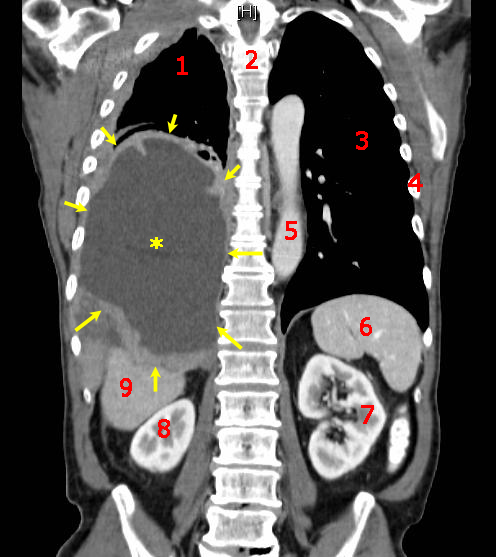
    The symptoms of mesothelioma include shortness of breath due to pleural effusion (fluid between the lung and the chest wall) or chest wall pain, and general symptoms such as weight loss. The diagnosis may be suspected with chest X-ray and CT scan, and is confirmed with a biopsy (tissue sample) and microscopic examination. A thoracoscopy (inserting a tube with a camera into the chest) can be used to take biopsies. It allows the introduction of substances such as talc to obliterate the pleural space (called pleurodesis), which prevents more fluid from accumulating and pressing on the lung. Despite treatment with chemotherapy, radiation therapy or sometimes surgery, the disease carries a poor prognosis. Research about screening tests for the early detection of mesothelioma is ongoing.

    Signs and symptoms

    Symptoms or signs of mesothelioma may not appear until 20 to 50 years (or more) after exposure to asbestos. Shortness of breath, cough, and pain in the chest due to an accumulation of fluid in the pleural space (pleural effusion) are often symptoms of pleural mesothelioma.

    Symptoms of peritoneal mesothelioma include weight loss and cachexia, abdominal swelling and pain due to ascites (a buildup of fluid in the abdominal cavity). Other symptoms of Peritoneal Mesothelioma may include bowel obstruction, blood clotting abnormalities, anemia, and fever. If the cancer has spread beyond the mesothelium to other parts of the body, symptoms may include pain, trouble swallowing, or swelling of the neck or face.

    These symptoms may be caused by mesothelioma or by other, less serious conditions.

    Mesothelioma that affects the pleura can cause these signs and symptoms:

        * Chest wall pain
        * Pleural effusion, or fluid surrounding the lung
        * Shortness of breath
        * Fatigue or anemia
        * Wheezing, hoarseness, or cough
        * Blood in the sputum (fluid) coughed up (hemoptysis)

    In severe cases, the person may have many tumor masses. The individual may develop a pneumothorax, or collapse of the lung. The disease may metastasize, or spread, to other parts of the body.

    Tumors that affect the abdominal cavity often do not cause symptoms until they are at a late stage. Symptoms include:

        * Abdominal pain
        * Ascites, or an abnormal buildup of fluid in the abdomen
        * A mass in the abdomen
        * Problems with bowel function
        * Weight loss

    In severe cases of the disease, the following signs and symptoms may be present:

        * Blood clots in the veins, which may cause thrombophlebitis
        * Disseminated intravascular coagulation, a disorder causing severe bleeding in many body organs
        * Jaundice, or yellowing of the eyes and skin
        * Low blood sugar level
        * Pleural effusion
        * Pulmonary emboli, or blood clots in the arteries of the lungs
        * Severe ascites

    A mesothelioma does not usually spread to the bone, brain, or adrenal glands. Pleural tumors are usually found only on one side of the lungs.

     Cause

    Working with asbestos is the major risk factor for mesothelioma. In the United States, asbestos is the major cause of malignant mesothelioma and has been considered "indisputably" associated with the development of mesothelioma. Indeed, the relationship between asbestos and mesothelioma is so strong that many consider mesothelioma a “signal” or “sentinel” tumor. A history of asbestos exposure exists in most cases. However, mesothelioma has been reported in some individuals without any known exposure to asbestos. In rare cases, mesothelioma has also been associated with irradiation, intrapleural thorium dioxide (Thorotrast), and inhalation of other fibrous silicates, such as erionite. Some studies suggest that simian virus 40 (SV40) may act as a cofactor in the development of mesothelioma.

    Asbestos was known in antiquity, but it wasn't mined and widely used commercially until the late 1800s. Its use greatly increased during World War II. Since the early 1940s, millions of American workers have been exposed to asbestos dust. Initially, the risks associated with asbestos exposure were not publicly known. However, an increased risk of developing mesothelioma was later found among shipyard workers, people who work in asbestos mines and mills, producers of asbestos products, workers in the heating and construction industries, and other tradespeople. Today, the official position of the U.S. Occupational Safety and Health Administration (OSHA) and the U.S. EPA is that protections and "permissible exposure limits" required by U.S. regulations, while adequate to prevent most asbestos-related non-malignant disease, they are not adequate to prevent or protect against asbestos-related cancers such as mesothelioma. Likewise, the British Government's Health and Safety Executive (HSE) states formally that any threshold for mesothelioma must be at a very low level and it is widely agreed that if any such threshold does exist at all, then it cannot currently be quantified. For practical purposes, therefore, HSE assumes that no such "safe" threshold exists. Others have noted as well that there is no evidence of a threshold level below which there is no risk of mesothelioma.There appears to be a linear, dose-response relationship, with increasing dose producing increasing disease. Nevertheless, mesothelioma may be related to brief, low level or indirect exposures to asbestos.The dose necessary for effect appears to be lower for asbestos-induced mesothelioma than for pulmonary asbestosis or lung cancer. Again, there is no known safe level of exposure to asbestos as it relates to increased risk of mesothelioma.

    The duration of exposure to asbestos causing mesothelioma can be short. For example, cases of mesothelioma have been documented with only 1–3 months of exposure. People who work with asbestos wear personal protective equipment to lower their risk of exposure.

    Latency, the time from first exposure to manifestation of disease, is prolonged in the case of mesothelioma. It is virtually never less than fifteen years and peaks at 30–40 years.In a review of occupationally related mesothelioma cases, the median latency was 32 years. Based upon the data from Peto et al, the risk of mesothelioma appears to increase to the third or fourth power from first exposure.

    Environmental exposures
    Incidence of mesothelioma had been found to be higher in populations living near naturally occurring asbestos. For example, in central Cappadocia, Turkey, mesothelioma was causing 50% of all deaths in three small villages — Tuzköy, Karain and Sarıhıdır. Initially, this was attributed to erionite, a zeolite mineral with similar properties to asbestos, however, recently, detailed epidemiological investigation showed that erionite causes mesothelioma mostly in families with a genetic predisposition.The documented presence of asbestos fibers in water supplies and food products has fostered concerns about the possible impact of long-term and, as yet, unknown exposure of the general population to these fibers.

    Occupational

    Exposure to asbestos fibers has been recognized as an occupational health hazard since the early 1900s. Numerous epidemiological studies have associated occupational exposure to asbestos with the development of pleural plaques, diffuse pleural thickening, asbestosis, carcinoma of the lung and larynx, gastrointestinal tumors, and diffuse malignant mesothelioma of the pleura and peritoneum. Asbestos has been widely used in many industrial products, including cement, brake linings, gaskets, roof shingles, flooring products, textiles, and insulation.

    Commercial asbestos mining at Wittenoom, Western Australia, occurred between 1945 and 1966. A cohort study of miners employed at the mine reported that while no deaths occurred within the first 10 years after crocidolite exposure, 85 deaths attributable to mesothelioma had occurred by 1985. By 1994, 539 reported deaths due to mesothelioma had been reported in Western Australia.

    Diagnosis
    File:Tumor Mesothelioma2 legend.jpgDiagnosing mesothelioma is often difficult, because the symptoms are similar to those of a number of other conditions. Diagnosis begins with a review of the patient's medical history. A history of exposure to asbestos may increase clinical suspicion for mesothelioma. A physical examination is performed, followed by chest X-ray and often lung function tests. The X-ray may reveal pleural thickening commonly seen after asbestos exposure and increases suspicion of mesothelioma. A CT (or CAT) scan or an MRI is usually performed. If a large amount of fluid is present, abnormal cells may be detected by cytopathology if this fluid is aspirated with a syringe. For pleural fluid, this is done by thoracentesis or tube thoracostomy (chest tube); for ascites, with paracentesis or ascitic drain; and for pericardial effusion with pericardiocentesis. While absence of malignant cells on cytology does not completely exclude mesothelioma, it makes it much more unlikely, especially if an alternative diagnosis can be made (e.g. tuberculosis, heart failure). Unfortunately, the diagnosis of malignant mesothelioma by cytology alone is difficult, even with expert pathologists.

    Generally, a biopsy is needed to confirm a diagnosis of malignant mesothelioma. A doctor removes a sample of tissue for examination under a microscope by a pathologist. A biopsy may be done in different ways, depending on where the abnormal area is located. If the cancer is in the chest, the doctor may perform a thoracoscopy. In this procedure, the doctor makes a small cut through the chest wall and puts a thin, lighted tube called a thoracoscope into the chest between two ribs. Thoracoscopy allows the doctor to look inside the chest and obtain tissue samples. Alternatively, the chest surgeon might directly open the chest (thoracotomy). If the cancer is in the abdomen, the doctor may perform a laparoscopy. To obtain tissue for examination, the doctor makes a small incision in the abdomen and inserts a special instrument into the abdominal cavity. If these procedures do not yield enough tissue, more extensive diagnostic surgery may be necessary.

    Immunohistochemical studies play an important role for the pathologist in differentiating malignant mesothelioma from neoplastic mimics. There are numerous tests and panels available. No single test is perfect for distinguishing mesothelioma from carcinoma or even benign versus malignant.

    Pathophysiology
    The mesothelium consists of a single layer of flattened to cuboidal cells forming the epithelial lining of the serous cavities of the body including the peritoneal, pericardial and pleural cavities. Deposition of asbestos fibers in the parenchyma of the lung may result in the penetration of the visceral pleura from where the fiber can then be carried to the pleural surface, thus leading to the development of malignant mesothelial plaques. The processes leading to the development of peritoneal mesothelioma remain unresolved, although it has been proposed that asbestos fibers from the lung are transported to the abdomen and associated organs via the lymphatic system. Additionally, asbestos fibers may be deposited in the gut after ingestion of sputum contaminated with asbestos fibers.

    Pleural contamination with asbestos or other mineral fibers has been shown to cause cancer. Long thin asbestos fibers (blue asbestos, amphibole fibers) are more potent carcinogens than "feathery fibers" (chrysotile or white asbestos fibers).However, there is now evidence that smaller particles may be more dangerous than the larger fibers. They remain suspended in the air where they can be inhaled, and may penetrate more easily and deeper into the lungs. "We probably will find out a lot more about the health aspects of asbestos from [the World Trade Center attack], unfortunately," said Dr. Alan Fein, chief of pulmonary and critical-care medicine at North Shore-Long Island Jewish Health System. Dr. Fein has treated several patients for "World Trade Center syndrome" or respiratory ailments from brief exposures of only a day or two near the collapsed buildings.
    Mesothelioma development in rats has been demonstrated following intra-pleural inoculation of phosphorylated chrysotile fibers. It has been suggested that in humans, transport of fibers to the pleura is critical to the pathogenesis of mesothelioma. This is supported by the observed recruitment of significant numbers of macrophages and other cells of the immune system to localized lesions of accumulated asbestos fibers in the pleural and peritoneal cavities of rats. These lesions continued to attract and accumulate macrophages as the disease progressed, and cellular changes within the lesion culminated in a morphologically malignant tumor.

    Experimental evidence suggests that asbestos acts as a complete carcinogen with the development of mesothelioma occurring in sequential stages of initiation and promotion. The molecular mechanisms underlying the malignant transformation of normal mesothelial cells by asbestos fibers remain unclear despite the demonstration of its oncogenic capabilities. However, complete in vitro transformation of normal human mesothelial cells to malignant phenotype following exposure to asbestos fibers has not yet been achieved. In general, asbestos fibers are thought to act through direct physical interactions with the cells of the mesothelium in conjunction with indirect effects following interaction with inflammatory cells such as macrophages.

    Analysis of the interactions between asbestos fibers and DNA has shown that phagocytosed fibers are able to make contact with chromosomes, often adhering to the chromatin fibers or becoming entangled within the chromosome. This contact between the asbestos fiber and the chromosomes or structural proteins of the spindle apparatus can induce complex abnormalities. The most common abnormality is monosomy of chromosome 22. Other frequent abnormalities include structural rearrangement of 1p, 3p, 9p and 6q chromosome arms.

    Common gene abnormalities in mesothelioma cell lines include deletion of the tumor suppressor genes:

        * Neurofibromatosis type 2 at 22q12
        * P16INK4A
        * P14ARF

    Asbestos has also been shown to mediate the entry of foreign DNA into target cells. Incorporation of this foreign DNA may lead to mutations and oncogenesis by several possible mechanisms:

        * Inactivation of tumor suppressor genes
        * Activation of oncogenes
        * Activation of proto-oncogenes due to incorporation of foreign DNA containing a promoter region
        * Activation of DNA repair enzymes, which may be prone to error
        * Activation of telomerase
        * Prevention of apoptosis

    Asbestos fibers have been shown to alter the function and secretory properties of macrophages, ultimately creating conditions which favour the development of mesothelioma. Following asbestos phagocytosis, macrophages generate increased amounts of hydroxyl radicals, which are normal by-products of cellular anaerobic metabolism. However, these free radicals are also known clastogenic and membrane-active agents thought to promote asbestos carcinogenicity. These oxidants can participate in the oncogenic process by directly and indirectly interacting with DNA, modifying membrane-associated cellular events, including oncogene activation and perturbation of cellular antioxidant defences.

    Asbestos also may possess immunosuppressive properties. For example, chrysotile fibres have been shown to depress the in vitro proliferation of phytohemagglutinin-stimulated peripheral blood lymphocytes, suppress natural killer cell lysis and significantly reduce lymphokine-activated killer cell viability and recovery. Furthermore, genetic alterations in asbestos-activated macrophages may result in the release of potent mesothelial cell mitogens such as platelet-derived growth factor (PDGF) and transforming growth factor-β (TGF-β) which in turn, may induce the chronic stimulation and proliferation of mesothelial cells after injury by asbestos fibres.

    Treatment

    The prognosis for malignant mesothelioma remains disappointing, although there have been some modest improvements in prognosis from newer chemotherapies and multimodality treatments.Treatment of malignant mesothelioma at earlier stages has a better prognosis, but cures are exceedingly rare. Clinical behavior of the malignancy is affected by several factors including the continuous mesothelial surface of the pleural cavity which favors local metastasis via exfoliated cells, invasion to underlying tissue and other organs within the pleural cavity, and the extremely long latency period between asbestos exposure and development of the disease. The histological subtype and the patient's age and health status also help predict prognosis.

    Surgery

    Surgery, by itself, has proved disappointing. In one large series, the median survival with surgery (including extrapleural pneumonectomy) was only 11.7 months.[28] However, research indicates varied success when used in combination with radiation and chemotherapy (Duke, 2008). (For more information on multimodality therapy with surgery, see below). A pleurectomy/decortication is the most common surgery, in which the lining of the chest is removed. Less common is an extrapleural pneumonectomy (EPP), in which the lung, lining of the inside of the chest, the hemi-diaphragm and the pericardium are removed.

    Radiation

    For patients with localized disease, and who can tolerate a radical surgery, radiation is often given post-operatively as a consolidative treatment. The entire hemi-thorax is treated with radiation therapy, often given simultaneously with chemotherapy. This approach of using surgery followed by radiation with chemotherapy has been pioneered by the thoracic oncology team at Brigham & Women's Hospital in Boston.[29] Delivering radiation and chemotherapy after a radical surgery has led to extended life expectancy in selected patient populations with some patients surviving more than 5 years. As part of a curative approach to mesothelioma, radiotherapy is also commonly applied to the sites of chest drain insertion, in order to prevent growth of the tumor along the track in the chest wall.

    Although mesothelioma is generally resistant to curative treatment with radiotherapy alone, palliative treatment regimens are sometimes used to relieve symptoms arising from tumor growth, such as obstruction of a major blood vessel. Radiation therapy when given alone with curative intent has never been shown to improve survival from mesothelioma. The necessary radiation dose to treat mesothelioma that has not been surgically removed would be very toxic.

    Chemotherapy

    Chemotherapy is the only treatment for mesothelioma that has been proven to improve survival in randomised and controlled trials. The landmark study published in 2003 by Vogelzang and colleagues compared cisplatin chemotherapy alone with a combination of cisplatin and pemetrexed (brand name Alimta) chemotherapy in patients who had not received chemotherapy for malignant pleural mesothelioma previously and were not candidates for more aggressive "curative" surgery.[30] This trial was the first to report a survival advantage from chemotherapy in malignant pleural mesothelioma, showing a statistically significant improvement in median survival from 10 months in the patients treated with cisplatin alone to 13.3 months in the combination pemetrexed group in patients who received supplementation with folate and vitamin B12. Vitamin supplementation was given to most patients in the trial and pemetrexed related side effects were significantly less in patients receiving pemetrexed when they also received daily oral folate 500mcg and intramuscular vitamin B12 1000mcg every 9 weeks compared with patients receiving pemetrexed without vitamin supplementation. The objective response rate increased from 20% in the cisplatin group to 46% in the combination pemetrexed group. Some side effects such as nausea and vomiting, stomatitis, and diarrhoea were more common in the combination pemetrexed group but only affected a minority of patients and overall the combination of pemetrexed and cisplatin was well tolerated when patients received vitamin supplementation; both quality of life and lung function tests improved in the combination pemetrexed group. In February 2004, the United States Food and Drug Administration approved pemetrexed for treatment of malignant pleural mesothelioma. However, there are still unanswered questions about the optimal use of chemotherapy, including when to start treatment, and the optimal number of cycles to give.

    Cisplatin in combination with raltitrexed has shown an improvement in survival similar to that reported for pemetrexed in combination with cisplatin, but raltitrexed is no longer commercially available for this indication. For patients unable to tolerate pemetrexed, cisplatin in combination with gemcitabine or vinorelbine is an alternative, or vinorelbine on its own, although a survival benefit has not been shown for these drugs. For patients in whom cisplatin cannot be used, carboplatin can be substituted but non-randomised data have shown lower response rates and high rates of haematological toxicity for carboplatin-based combinations, albeit with similar survival figures to patients receiving cisplatin.[31]

    In January 2009, the United States FDA approved using conventional therapies such as surgery in combination with radiation and or chemotherapy on stage I or II Mesothelioma after research conducted by a nationwide study by Duke University concluded an almost 50 point increase in remission rates.

    Immunotherapy

    Treatment regimens involving immunotherapy have yielded variable results. For example, intrapleural inoculation of Bacillus Calmette-Guérin (BCG) in an attempt to boost the immune response, was found to be of no benefit to the patient (while it may benefit patients with bladder cancer). Mesothelioma cells proved susceptible to in vitro lysis by LAK cells following activation by interleukin-2 (IL-2), but patients undergoing this particular therapy experienced major side effects. Indeed, this trial was suspended in view of the unacceptably high levels of IL-2 toxicity and the severity of side effects such as fever and cachexia. Nonetheless, other trials involving interferon alpha have proved more encouraging with 20% of patients experiencing a greater than 50% reduction in tumor mass combined with minimal side effects.

    Heated Intraoperative Intraperitoneal Chemotherapy

    A procedure known as heated intraoperative intraperitoneal chemotherapy was developed by Paul Sugarbaker at the Washington Cancer Institute.[32] The surgeon removes as much of the tumor as possible followed by the direct administration of a chemotherapy agent, heated to between 40 and 48°C, in the abdomen. The fluid is perfused for 60 to 120 minutes and then drained.

    This technique permits the administration of high concentrations of selected drugs into the abdominal and pelvic surfaces. Heating the chemotherapy treatment increases the penetration of the drugs into tissues. Also, heating itself damages the malignant cells more than the normal cells.

    This technique is also used in patients with malignant pleural mesothelioma

    Heated Intraoperative Intraperitoneal Chemotherapy

    A procedure known as heated intraoperative intraperitoneal chemotherapy was developed by Paul Sugarbaker at the Washington Cancer Institute.[32] The surgeon removes as much of the tumor as possible followed by the direct administration of a chemotherapy agent, heated to between 40 and 48°C, in the abdomen. The fluid is perfused for 60 to 120 minutes and then drained.

    This technique permits the administration of high concentrations of selected drugs into the abdominal and pelvic surfaces. Heating the chemotherapy treatment increases the penetration of the drugs into tissues. Also, heating itself damages the malignant cells more than the normal cells.

    This technique is also used in patients with malignant pleural mesothelioma

    Multimodality Therapy

    All of the standard approaches to treating solid tumors—radiation, chemotherapy, and surgery—have been investigated in patients with malignant pleural mesothelioma. Although surgery, by itself, is not very effective, surgery combined with adjuvant chemotherapy and radiation (trimodality therapy) has produced significant survival extension (3–14 years) among patients with favorable prognostic factors.[29] However, other large series of examining multimodality treatment have only demonstrated modest improvement in survival (median survival 14.5 months and only 29.6% surviving 2 years).[28] Reducing the bulk of the tumor with cytoreductive surgery is key to extending survival. Two surgeries have been developed: extrapleural pneumonectomy and pleurectomy/decortication. The indications for performing these operations are unique. The choice of operation depends on the size of the patient's tumor. This is an important consideration because tumor volume has been identified as a prognostic factor in mesothelioma.[34] Pleurectomy/decortication spares the underlying lung and is performed in patients with early stage disease when the intention is to remove all gross visible tumor (macroscopic complete resection), not simply palliation.[35] Extrapleural pneumonectomy is a more extensive operation that involves resection of the parietal and visceral pleurae, underlying lung, ipsilateral diaphragm, and ipsilateral pericardium. This operation is indicated for a subset of patients with more advanced tumors, who can tolerate a pneumonectomy

    Epidemiology

    Although reported incidence rates have increased in the past 20 years, mesothelioma is still a relatively rare cancer. The incidence rate varies from one country to another, from a low rate of less than 1 per 1,000,000 in Tunisia and Morocco, to the highest rate in Britain, Australia and Belgium: 30 per 1,000,000 per year.[37] For comparison, populations with high levels of smoking can have a lung cancer incidence of over 1,000 per 1,000,000. Incidence of malignant mesothelioma currently ranges from about 7 to 40 per 1,000,000 in industrialized Western nations, depending on the amount of asbestos exposure of the populations during the past several decades.[38] It has been estimated that incidence may have peaked at 15 per 1,000,000 in the United States in 2004. Incidence is expected to continue increasing in other parts of the world. Mesothelioma occurs more often in men than in women and risk increases with age, but this disease can appear in either men or women at any age. Approximately one fifth to one third of all mesotheliomas are peritoneal.

    Between 1940 and 1979, approximately 27.5 million people were occupationally exposed to asbestos in the United States.[39] Between 1973 and 1984, the incidence of pleural mesothelioma among Caucasian males increased 300%. From 1980 to the late 1990s, the death rate from mesothelioma in the USA increased from 2,000 per year to 3,000, with men four times more likely to acquire it than women. These rates may not be accurate, since it is possible that many cases of mesothelioma are misdiagnosed as adenocarcinoma of the lung, which is difficult to differentiate from mesothelioma.

    Famous victims

    Mesothelioma, though rare, has had a number of notable patients.

        * Malcolm McLaren, former manager of New York Dolls and Sex Pistols, died on 8 April 2010.

        * Hamilton Jordan, Chief of Staff for U.S. President Jimmy Carter and lifelong cancer activist, died in 2008.

        * Richard J. Herrnstein, psychologist and co-author of The Bell Curve, died in 1994.

        * Australian anti-racism activist Bob Bellear died in 2005.

        * British science fiction writer Michael G. Coney, responsible for nearly 100 works, also died in 2005.

        * American film and television actor Paul Gleason, perhaps best known for his portrayal of Principal Richard Vernon in the 1985 film The Breakfast Club, died in 2006.

        * Mickie Most, an English record producer, died of mesothelioma in 2003.

        * Paul Rudolph, American architect, died in 1997.

        * Bernie Banton, an Australian workers' rights activist, fought a long battle for compensation from James Hardie after he contracted mesothelioma after working for that company. He claimed James Hardie knew of the dangers of asbestos before he began work with the substance making insulation for power stations. Mesothelioma eventually took his life along with his brothers and hundreds of James Hardie workers. James Hardie made an undisclosed settlement with Banton only when his mesothelioma had reached its final stages and he was expected to have no more than 48 hours to live. Australian Prime Minister Kevin Rudd mentioned Banton's extended struggle in his acceptance speech after winning the 2007 Australian federal election.

        * Actor Steve McQueen was diagnosed with peritoneal mesothelioma on December 22, 1979. He was not offered surgery or chemotherapy because doctors felt the cancer was too advanced. McQueen subsequently sought alternative treatments at clinics in Mexico. He died of a heart attack on November 7, 1980, in Juárez, Mexico, following cancer surgery. He may have been exposed to asbestos while serving with the U.S. Marines as a young adult—asbestos was then commonly used to insulate ships' piping—or from its use as an insulating material in automobile racing suits (McQueen was an avid racing driver and fan).[40]

        * United States Congressman Bruce Vento died of mesothelioma in 2000. The Bruce Vento Hopebuilder award is given yearly by his wife at the MARF Symposium to persons or organizations who have done the most to support mesothelioma research and advocacy.

        * Rock and roll musician and songwriter Warren Zevon, after a long period of untreated illness and pain, was diagnosed with inoperable mesothelioma in the fall of 2002. Refusing treatments that he believed might incapacitate him, Zevon focused his energies on recording his final album The Wind, including the song "Keep Me in Your Heart," which speaks of his failing breath. Zevon died at his home in Los Angeles, California, on September 7, 2003.

        * Christie Hennessy, the influential Irish singer-songwriter, died of mesothelioma in 2007, and had stridently refused to accept the prognosis in the weeks before his death.[41] Hennessy's mesothelioma has been attributed to his younger years spent working on building sites in London.[42][43]

        * Bob Miner, one of the founders of Software Development Labs, the forerunner of Oracle Corporation, died of mesothelioma in 1994.

        * Scottish Labour MP John William MacDougall died of mesothelioma on August 13, 2008, after fighting the disease for two years.[44]

        * Australian journalist and news presenter Peter Leonard of Canberra succumbed to the condition on September 23, 2008.

        * Terrence McCann, Olympic gold medalist and longtime Executive Director of Toastmasters, died of mesothelioma on June 7, 2006, at his home in Dana Point, California.

        * Merlin Olsen, Pro Football Hall of Famer and television actor, died on March 10, 2010, from mesothelioma that had been diagnosed in 2009.


    Notable people who have lived for some time with mesothelioma

    Although life expectancy with this disease is typically limited, there are notable survivors. In July 1982, Stephen Jay Gould was diagnosed with peritoneal mesothelioma. After his diagnosis, Gould wrote "The Median Isn't the Message"[45] for Discover magazine, in which he argued that statistics such as median survival are just useful abstractions, not destiny. Gould lived for another 20 years, eventually succumbing to metastatic adenocarcinoma of the lung, not mesothelioma. Author Paul Kraus was diagnosed with peritoneal mesothelioma in July 1997. He was given a prognosis of less than a year to live and used a variety of complementary modalities. He continues to outlive his prognosis and wrote a book about his experience "Surviving Mesothelioma and Other Cancers: A Patient's Guide" in which he presented his philosophy about healing and the decision making that led him to use integrative medicine.